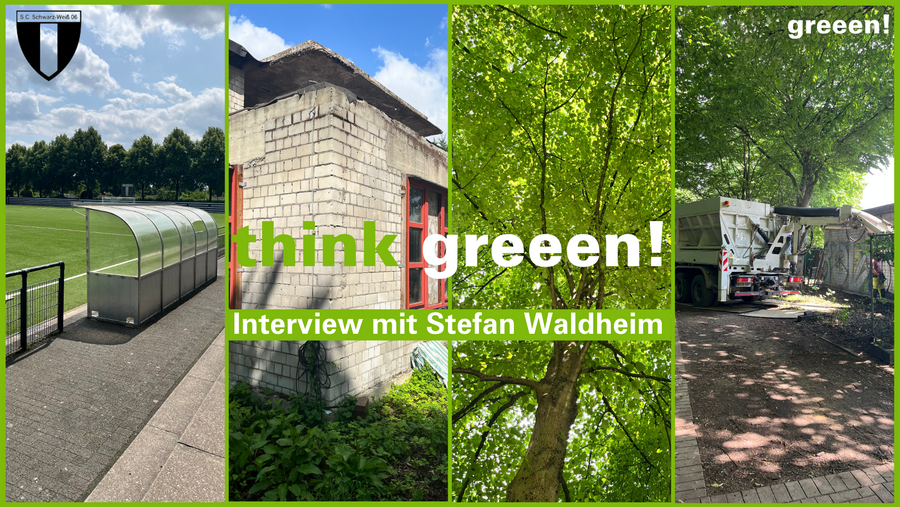
Every Tree Counts: Why Tree Protection is Crucial for Architecture
Tree protection is responsibility, not just law.
Architecture must protect trees from the planning stage.
When, how, and why is protection essential? What should we pay attention to, and what vision does the industry have for the future?
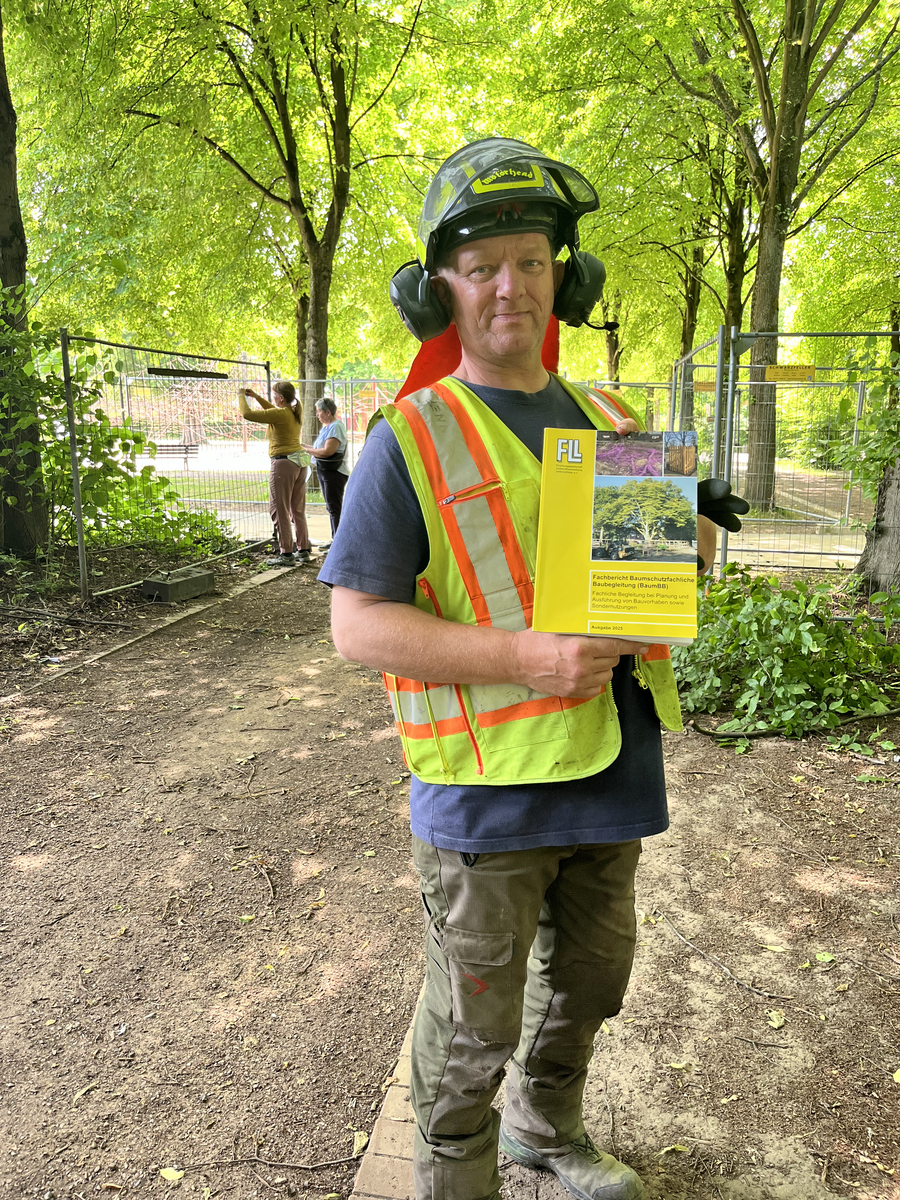
We asked Stefan Heimig.
Read on to discover how tree care shapes our cities, our environment, and our future.
greeen!: What role does a tree play in terms of biodiversity and nature conservation?
Stefan: A tree is truly a microcosm—a huge topic. Especially regarding species protection, which for far too long has been neglected, it’s becoming an increasingly important focus. Take, for example, a large oak or linden tree: such a tree typically hosts between 300 and 400 different species in its structure. That’s just a fact.
greeen!: What significance does a tree have for humans and beyond species protection?
Stefan: Many people forget what a tree provides, completely free of charge. Without trees, there would be no oxygen, and without oxygen, we wouldn’t exist. Trees, on the other hand, can exist perfectly well without humans. But we cannot exist without them. It’s a simple calculation: trees existed long before us, and they will still stand long after we’re gone. This isn’t sarcasm, it’s plain realism.
greeen!: What ecological services does a large tree provide?
Stefan: The ecological contributions of a large tree are enormous and often completely underestimated. Take, for example, a large oak with a canopy diameter of 25 to 35 meters. This tree produces enough oxygen annually for at least 100 people. But because breathing is so taken for granted, this value is rarely noticed. Only when it’s missing do we realize how essential it is.
Trees also affect the climate. They provide shade, cool their surroundings, and counteract heat stress in cities. Look at Switzerland, where landslides are increasing, or southern Italy, where temperatures reach 50 to 55 degrees Celsius. These developments clearly show how severe climate problems are. The scale is gigantic. I’m not trying to paint everything black, but to state reality clearly.
greeen!: When is the right time to transplant trees, and how is this done in practice?
Stefan: The best time is winter, when the tree’s metabolism is slowed. It works much better with deciduous trees then. In midsummer, it’s almost impossible because the stress on the tree is simply too great.
The company Opitz has a very high success rate here (around 80% for transplanted trees). That’s impressive, especially for large specimens, as it requires massive machines, large mobile cranes, and a lot of expertise. I always say: if we can build wind turbines 150 meters high, we should also be able to transplant a 40-meter-high tree. Anything less is hard to justify, and politics plays a role too.
greeen!: What dangers arise for trees when roots are damaged during construction, and what preventive measures make sense?
Stefan: It’s a simple fact: as soon as roots are damaged or torn, there’s a high risk that fungi, viruses, or bacteria will enter the tree through the open wounds. Such infections can weaken the entire tree or even cause it to die.
Each tree must be considered individually. Factors like vitality, structure, and species are crucial. A healthy hornbeam, for example, can often compensate for damage because it isolates wounds quickly and effectively. Other species react more sensitively: their roots die faster after damage, and fungal infestations occur more frequently.
Root damage affects not only the tree’s nutrient supply but also its stability. Losing about 10% of the root mass is considered severe; at 15%, it’s usually considered total loss because the tree can neither sustain itself nor anchor firmly in the ground. The problem worsens in summer, when water uptake is limited and the tree must spend energy sealing wounds. Without this energy, aggressive fungi like the crust fungus can kill the tree quickly.
To minimize these risks, protective measures should be implemented in advance—ideally a year before construction begins. This is a “golden rule” in tree protection. Basically, tree experts should be involved early in planning to ensure the long-term vitality and stability of trees.
greeen!: How do you view the current climate targets and society’s responsibility in dealing with the climate crisis?
Stefan: Honestly, it scares me. We have a mountain of problems ahead, and what we’re experiencing now is just a preview. I spoke with a professor who clearly said: the political statements around the 1.5-degree limit are simply unrealistic. We must prepare for 4 to 5 degrees of warming—at minimum. Landmasses heat up much faster than oceans. This isn’t an opinion; it’s physics.
Of course, I understand the desire to raise awareness. I’ve personally run children’s climbing courses, given lectures, and tried to create awareness. But eventually, enthusiasm wanes when you see the scale of resistance. One thing is clear: radical rethinking, real awareness, and above all appreciation are needed. Appreciation is not just a nice bonus; it’s vital. Without it, we will perish—simple biology and climate science.
Politics plays a central role here. It’s not about shifting responsibility entirely, but we need clear frameworks, decisions, and pathways. Instead, we often see blockages and shirking responsibility. Many decision-makers prefer to pass responsibility rather than take it, which worsens the problem.
greeen!: Why is tree protection becoming increasingly important on construction sites?
Stefan: Tree protection on construction sites is indeed becoming more important. Municipalities handle it very differently. Some approach it pragmatically without politicizing it. Others are more influenced by political structures. Hamburg is a good example, with strict regulations for many years—it’s a real pioneer in this area.
It’s not just about ecology, but also economy. The costs of repairing or preserving damaged old trees are enormous compared to the expense of protective measures during construction. Take, for example, a 35-meter-high beech tree. If it’s damaged by construction, it will die within a few growth seasons. Restoring it is almost impossible. A damaged tree also poses risks: when it loses dry wood from the upper branches, we’re talking about tons, not just a few kilos, that could fall.
The benefits of such a tree are immense, yet this is still vastly underestimated.
greeen!: Why is protecting trees so important to you, and what do you hope for the future of tree protection?
Stefan: In my work, I’ve saved as many trees as possible, and that shows how urgently we must act. We tree experts have long understood the necessity: massive and rapid action is required. A tree cannot be measured in monetary terms—its ecological value is simply priceless.
I hope that in areas where this understanding already exists, we don’t always have to accept losses. We need a higher success rate in preservation so that our work not only limits damage but truly secures the future.
Thank you, Stefan, for your incredible work and time with us. We wish you continued success and greater societal awareness so that tree protection becomes a higher priority.
More about Baumpflege Heimig:
https://baumpflege-helmig.de
Curious about our Schwarz-Weiß 06 project?
https://www.greeenarchitects.eu/projekte/default-c99c6d7e046e39863d9b0c4a6567c163/