The Importance of Public Space
Public space is urban space.
To develop a city sustainably, the design of public space is essential. Streets, alleys, squares, promenades, parks, and canals encompass a wide range of characteristics and must be livable, flexible, and open for use. They share unrestricted accessibility for all residents and visitors of the city and the freedom to make use of these spaces. How is public space handled in Düsseldorf?
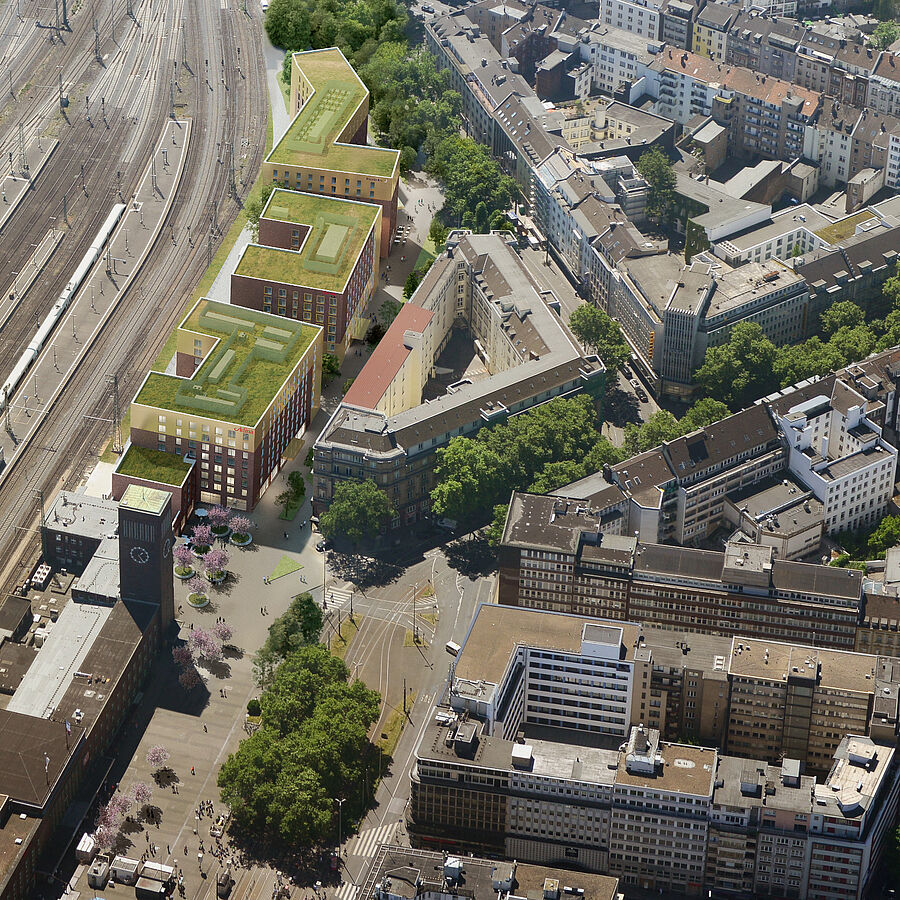
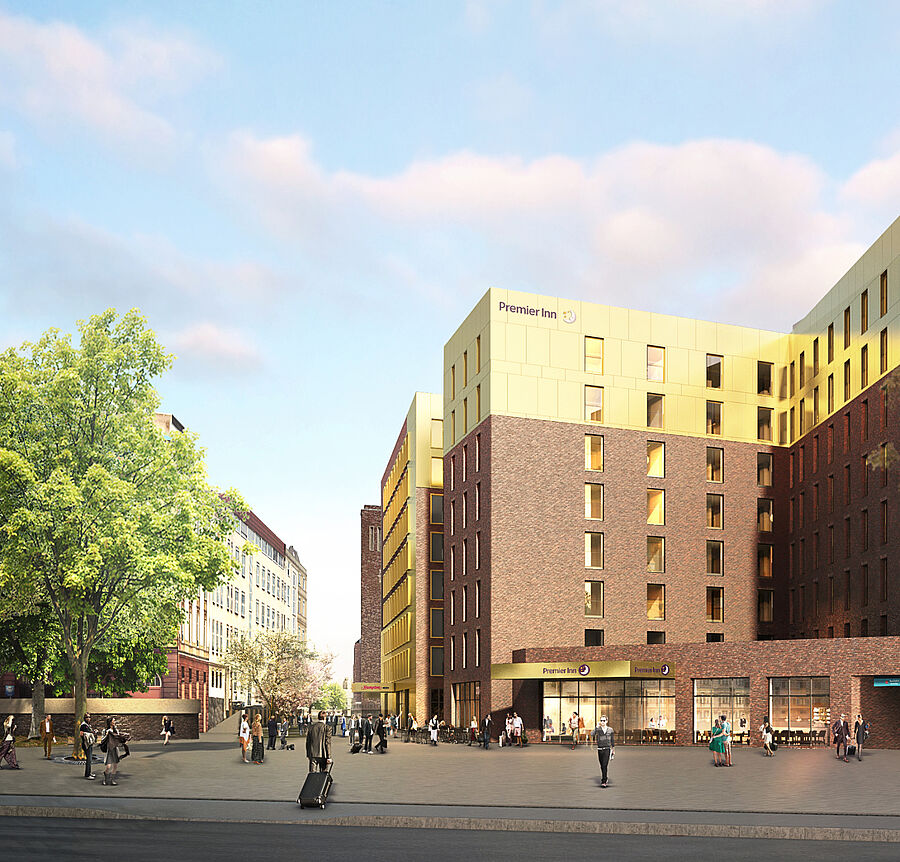
Around Düsseldorf Central Station, several changes are planned. On the northern edge of the station building, a 115-meter office tower is planned; the DB reception building will be expanded and, in addition to serving travelers, will undergo extensive renovations to gain the status of a shopping mall. At the same time, the station forecourt will be redesigned, KAP1 will become a new cultural center, three new Hotels with a pedestrian path to Mintropplatz are nearing completion, and the Grand Central city quarter on Erkrather Straße is in planning. These changes will impact the immediate station environment and offer the opportunity to ask: What kind of station district do we want? These developments also provide citizens the chance to participate in the discussion and help shape a vibrant and diverse station quarter for the future.
The entire surrounding area of the station district should be included in this discussion. Direct connections can be made from Fürstenplatz to Mintropplatz, further to the main station forecourt, to Worringer Platz, and from Bertha-von-Suttner-Platz to Oststraße and Stresemannplatz. Therefore, it should be a goal of the city of Düsseldorf to engage in an open discourse among all stakeholders in the district for democratic urban space development.
As the planning architecture firm for the three new hotels with a pedestrian path from Konrad-Adenauer-Platz to Mintropplatz, it is important to us to consider the direct effects of these new buildings on their immediate surroundings. Near the central station is Mintropplatz, which should be designed as a meeting place for everyone. Here, we are talking about a diverse mix of all citizens within the district, not displacement. It is crucial to involve current and future users of public space in the redesign processes to create an attractive meeting and gathering place. Positive contributions to this redesign can include promoting urban greenery, calming traffic, ensuring accessibility, and supporting cultural activities. The successful redesign of small squares can have a significant impact on the surrounding area, extending to Stresemannplatz and Worringer Platz.
An exemplary result of improving public space in Düsseldorf is undoubtedly the redesign of the Rhine promenade, which has had positive effects on the entire city. Similar expectations are tied to the Blue-Green Ring. Other public squares within the urban fabric also hold great significance for their local micro-location, such as Mintropplatz. Even in Bilk alone, there are numerous urban squares that, through minimal interventions, could positively affect their immediate surroundings and, like puzzle pieces, gradually create interaction across the city. We remain convinced that the success of sustainable urban development is measurable through the quality of public space. The COVID-19 pandemic has clearly demonstrated how important public space is: being able to occupy public space only in a limited way, as now, has shown us all how much humans still rely on analog experiences and how much we miss being “outdoors.”